
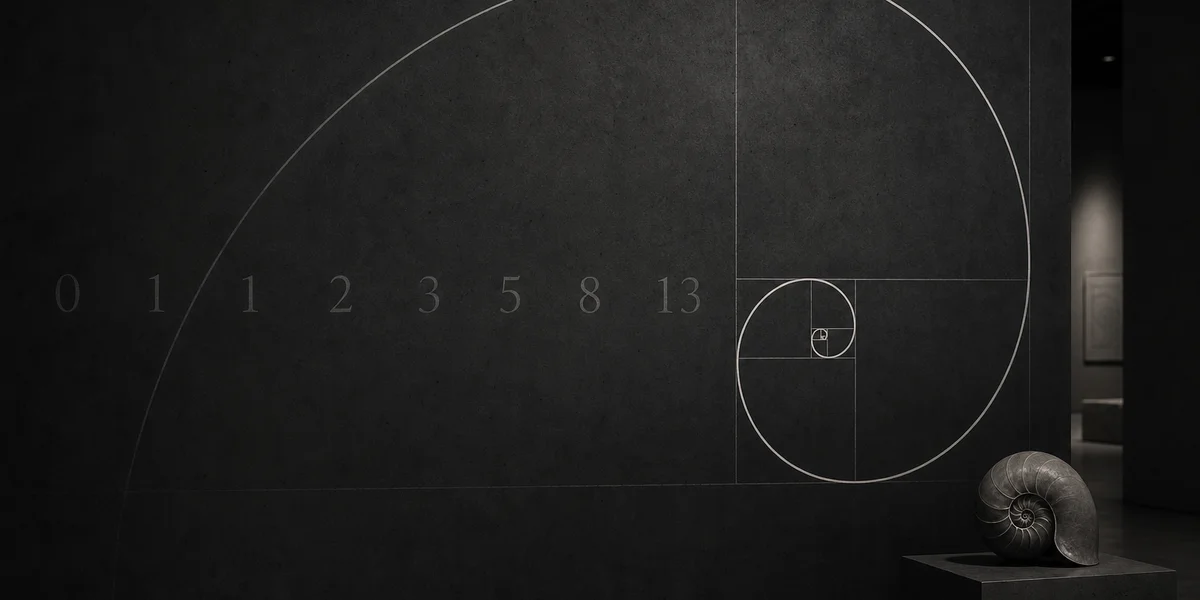
Quick answer
Retracement levels use percent ratios (38.2%, 61.8%, etc.), not F(n) integers. φ links the ideas.
Formula
- 61.8% ≈ golden ratio context
- F(n) is separate
Introduction
Fibonacci retracement is a charting idea in technical analysis. It is related to Fibonacci mathematics but it is not the same task as computing F(n).
Retail platforms draw horizontal lines at common percentages after a price move. Traders watch those levels as possible pause zones.
Understand pure integers first via what the Fibonacci sequence is and the home calculator.
See Fibonacci and the golden ratio for why 61.8% appears in ratio talk.
This article is educational only. We do not provide live prices, signals, or investment advice.
What a retracement tool does in markets
A retracement calculator in trading software takes a high and low price, then marks fractions of the move.
Common levels include 23.6%, 38.2%, 50%, 61.8%, and 78.6%. Names echo Fibonacci culture but inputs are prices, not F(n).
Market psychology narratives explain why crowds watch the same lines, not why the lines are guaranteed.
Integer Fibonacci calculators answer different questions entirely.
How ratios connect to φ
- 38.2% from sequence fractions
- 61.8% near φ-related proportions
Ratios come from dividing Fibonacci numbers or their neighbors, then converting to percentages.
φ≈1.618 appears in limit arguments about consecutive term ratios.
Derive integers with the recurrence and the home tool, not with a stock chart, before you interpret percentage lines.
Practice integer patterns until F(n) feels familiar; retracement labels borrow culture from those numbers, not the other way around.
Study workflow for math students
- Master F(n) Use the home calculator for integer terms.
- Learn φ limit Compute ratios of consecutive terms for large n.
- Separate finance tools Use licensed charting apps for retracement lines.
- Avoid mixing terms Do not plug stock prices into an integer F(n) tool.
Contrast two questions
Math question: "Find F(8)." Answer: 21 using the recurrence.
Chart question: "Mark 61.8% retracement of a swing." Answer uses price range, not F(8).
Keeping questions separate prevents category errors in exams and in personal projects.