
Quick answer
F(10)=55, F(15)=610, F(20)=6765 under F(0)=0, F(1)=1. Tables below match the home page.
Formula
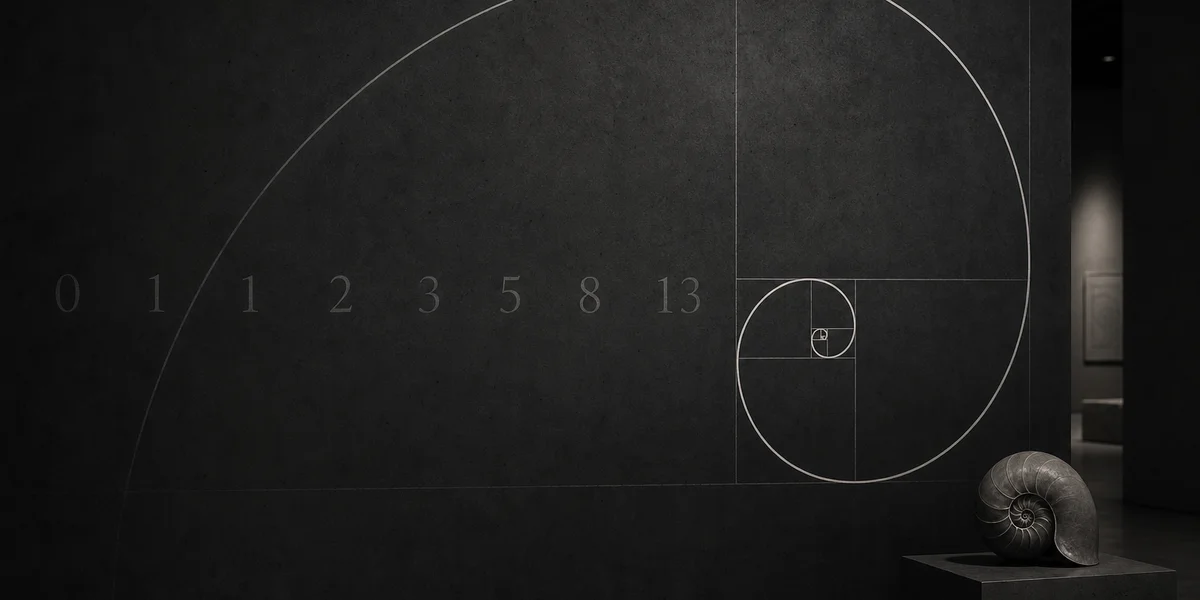
- 0, 1, 1, 2, 3, 5, 8, 13, 21, 34, 55, ...
Introduction
Examples turn abstract formulas into numbers you can recognize. When you see 89 in a puzzle, you should know whether that is F(11) or a different index under your course convention.
This article collects the first 10 and first 20 Fibonacci numbers in tables, explains how to read them, and notes how large terms behave.
Pair the tables with the introduction to the Fibonacci sequence if you still need the definition.
When you move from reading to generating lists programmatically, continue with Fibonacci number generator ideas for custom lengths.
Each value below was checked against the iterative rule used on the home calculator.
How to read the tables
Column n is the index. Column F(n) is the value at that index with F(0)=0 and F(1)=1.
The first 10 entries are short enough to memorize for quizzes. The first 20 entries cover most introductory worksheet questions.
Large Fibonacci terms grow quickly. F(30) is already in six digits, which is why comma formatting on the tool helps.
Always state indexing when you submit work. Teachers deduct points when the math is right but the subscript is wrong.
Building the tables from the recurrence
- Start 0, 1
- Each next cell = sum of previous two
You can reproduce every row with addition only. No calculator is required for the first 20 rows if you are careful.
Spreadsheet software can automate the row using the same rule. Dragging a formula down is a practical generator.
Symbolic background, including Binet, is worth reading after you can build tables by addition alone.
For a single large index, skip the table and type n in the home calculator instead of copying every intermediate sum.
Learning path with examples
- Memorize 0 through 8 Covers many multiple-choice items.
- Print the first 20 Keep a copy in your notebook.
- Pick random n Quiz yourself by covering F(n) cells.
- Verify electronically Type n in the home calculator.
Real-world style prompts
A staircase with 10 steps can be climbed one or two steps at a time; counting patterns connects to Fibonacci ideas in combinatorics courses.
A garden puzzle might ask how many pairs of rabbits appear after n months under idealized rules. The story is simplified, but the numbers are Fibonacci-like.
Finance charts use ratios inspired by the sequence, not the integers themselves. Keep examples separate from retracement lessons.